Vegetarian Pad Thai
Pad Thai is probably the most well-known Thai dish in the West. However, in Thailand it’s just another ‘street food’ dish. There are also specialty restaurants which serve it (think not known for ambiance, but known for good tasty pad thai). It’s not a dish which normally people would cook at home for dinner. It’s more of a street-food snack, quick meal, or on-the-go food. This is a vegetarian version, with no fish sauce or shrimp. If you would like a non-veggie version, switch the soy sauce for fish sauce and add 1 table of [glossary]dried small shrimp[/glossary] when you add the chives.
Ingredients
- 100g (3.5oz) dry wide rice noodles
- 4 tablespoons oil
- 1 tablespoon pickled radish
- 1 egg
- 2 tablespoons crushed peanuts, halved
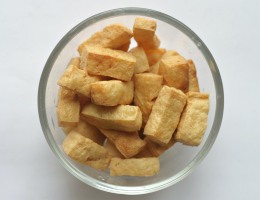
- 1/3 cup white tofu, cut into 1″ x 1/3″ x 1/3″ sticks
- 1/4 cup :garlic chives:, cut into 2″ long pieces
- 1/2 cup bean sprouts, halved
- 1 1/8 teaspoons chili powder (leave 1 teaspoon for garnish)
- 1/8 – 1/2 cup water, just in case
- 1 teaspoon white sugar, for garnish
- 1 lime piece, for garnish
Sauce
- 1 tablespoon white soy sauce
- 1 tablespoon palm sugar
- 1 tablespoon tamarind paste (1/8 c tamarind pulp + 1/8 c water)
Directions
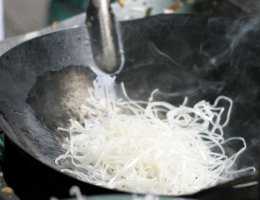
- Soak the rice noodles in room temperature water for 30-45 minutes before you cook. Do not soak in hot water or your noodles will get sticky. You want them to be soft enough to bend, but still firm. When finished soaking, drain, rinse, and set aside.
- Prepare the tamarind paste by squishing 1/8 cup tamarind pulp with 1/8 cup water in a small bowl with your fingers. Take out all the tamarind veins and seeds, and squish the fruit until the water turns into a thickish paste. Strain the pulp with a strainer and set aside.
- Prepare the sauce by adding 1 tablespoon of that tamarind paste you just made with the soy sauce & palm sugar in a small bowl. If your palm sugar is rock hard and doesn’t dissolve, you can cut into small bits and microwave the mixture for 10 seconds or so. That should soften the sugar enough to dissolve.
- Fry the tofu in hot oil until medium brown on each side. Remove from oil and set aside.
- Add more oil to the pan, if necessary. Wait until the oil is hot, and ‘dancing’ around (look at the surface — is the oil moving?) Add the pickled radish and fry for a few seconds to get the flavor out.
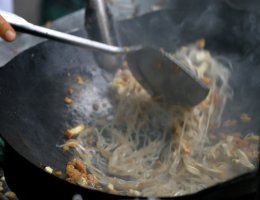
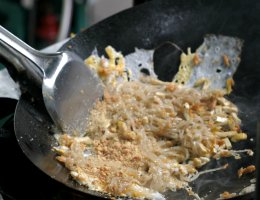
- Add your noodles and stir. You may want to add about 1/8-1/4 cup water too, depending on how hot your wok is. When the noodles soften a bit, add the sauce and the 1/8 teaspoon of the chili powder (leave the rest for garnish). Mix well — but be careful not to make a noodle mush. Try to keep the noodles separated as much as possible, covering the entire bottom of the pan. Spread them out.
- Cook until the noodles are soft — it may take a minute or two. Taste to be sure they are done. If they get too dry, you may need to add a bit more water.
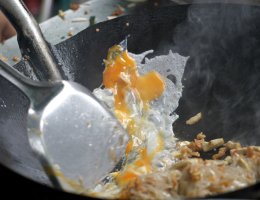
- When the noodles are done, push them to the side to create room for the egg. Crack the egg into the space and scramble it with your spatula and cover the bottom of the pan. Throw the noodles on top of the egg.
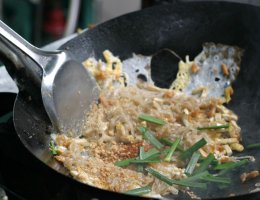
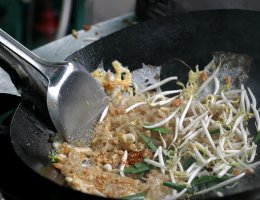
- Add the chives, 1/2 of the peanuts and 1/2 bean sprouts. Mix well, and remove to a plate. You may get egg bits stuck to the pan. Scrape them off and eat them. I call these ‘wok crispies’. You actually want to try to get them.
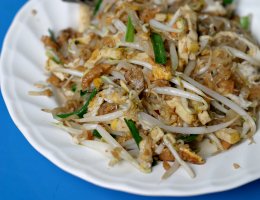
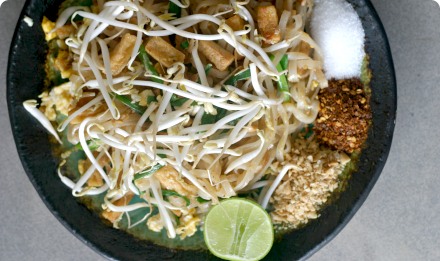
- Garnish with the rest of the sprouts on top, a slice of lime, and a pile each of the white sugar, the rest of the peanuts and the rest of the chili powder. You can also garnish with a few uncut garlic chives and 1/4 small banana flower too.
Note:
This recipe is for one large portion of Pad Thai. If you're making more than one portion, cook them one at a time in the pan, instead of mixing all at once. If you cook too much at a time, you'll get tasteless noodle mush. Also, this dish has a very short cooking time. Make sure to measure and line up all your ingredients within arm's reach before starting to cook.
 Loading...